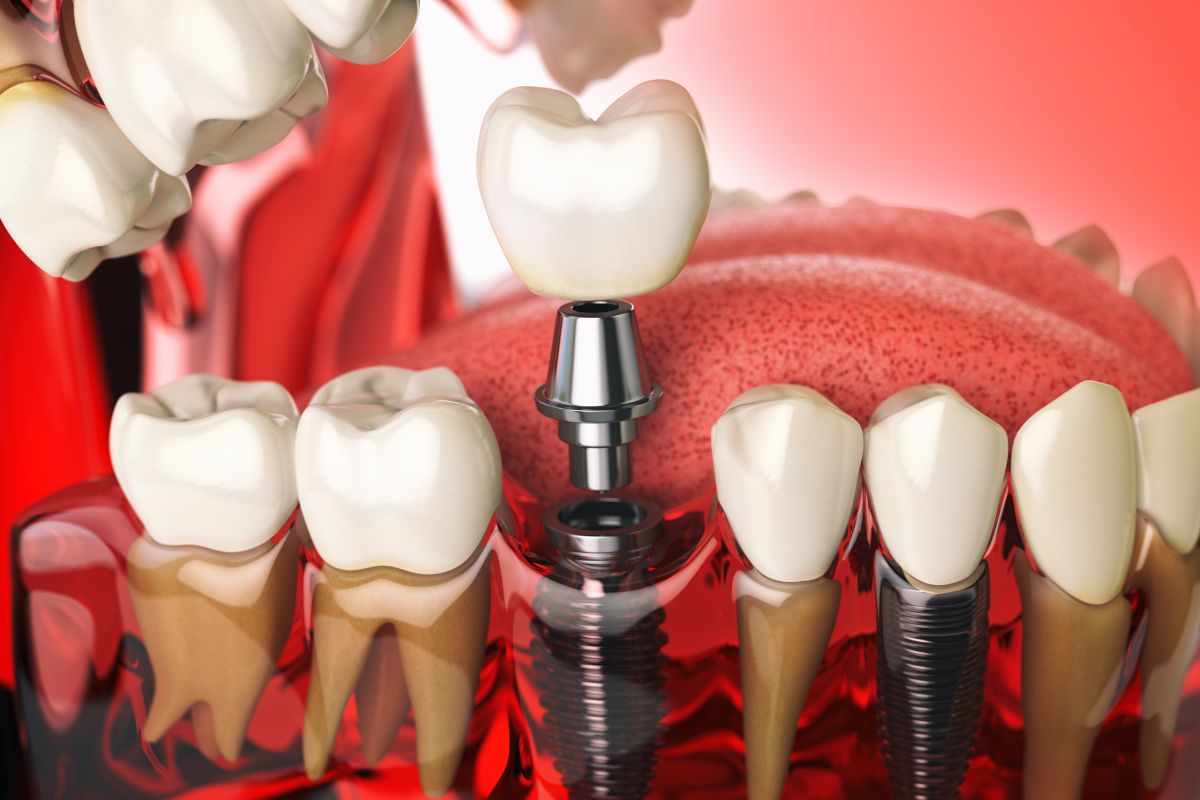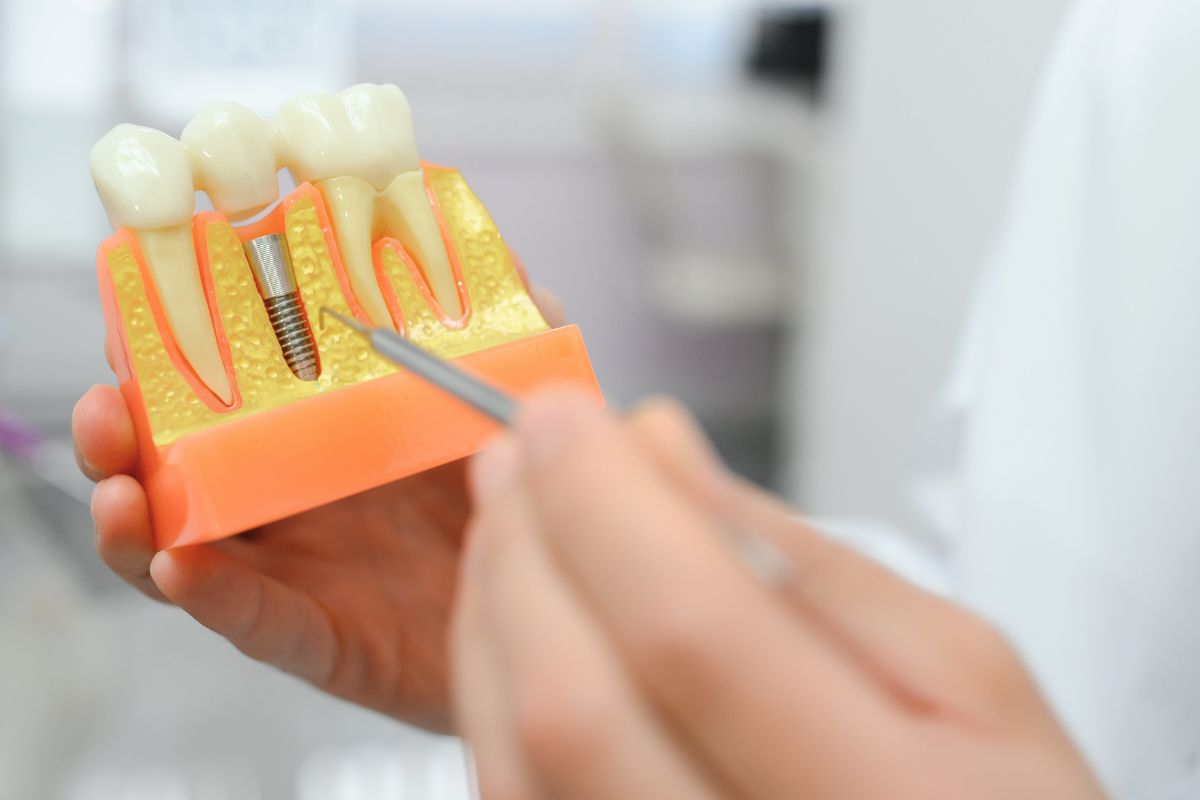

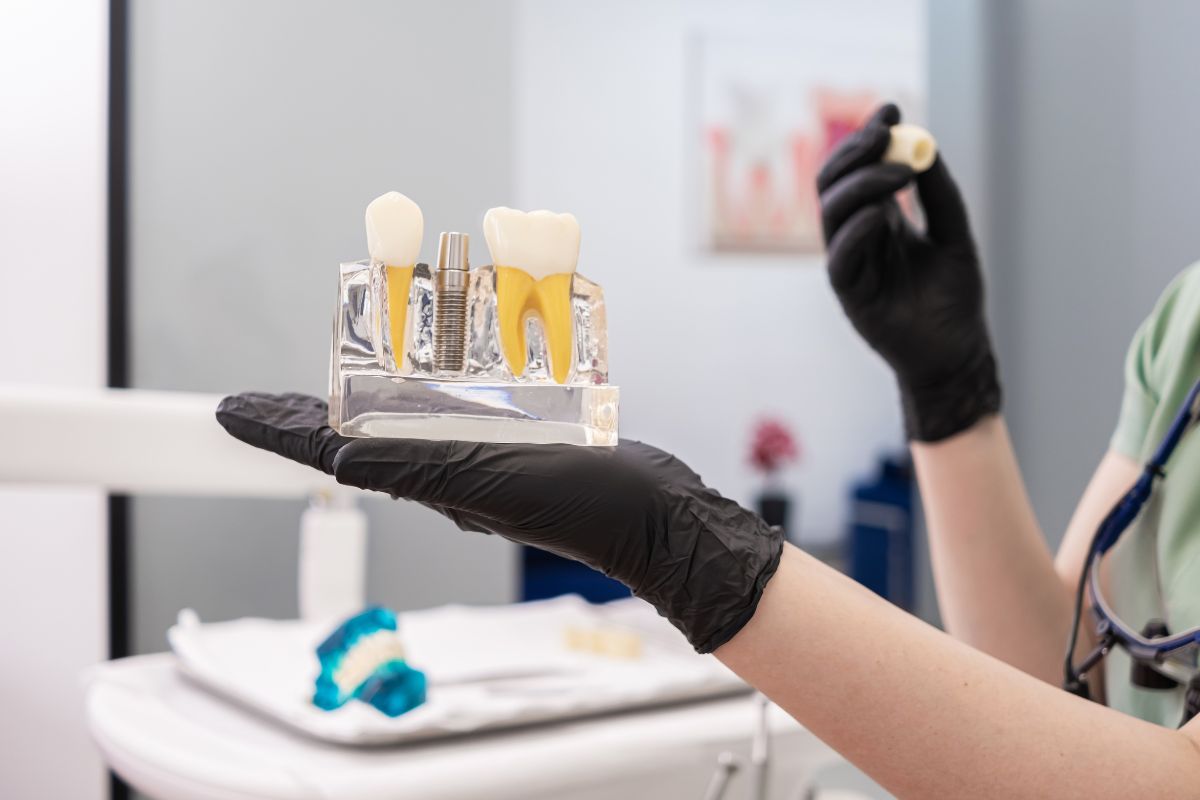
Dental implants often feel like a permanent fix, so it is easy to assume they do not need much attention after placement. That idea can lead to problems over time. While implants are designed to last, they still depend on healthy gums and proper daily habits. Another common belief is that implants do not require the same level of cleaning as natural teeth. In reality, they need consistent maintenance to stay stable and comfortable.
An implant restoration may include a crown, bridge, or a full denture supported by implants. Each type functions like natural teeth but relies on surrounding tissue for support. That is where daily hygiene becomes important. If you live around Brooklyn Heights and enjoy your routine walks near the promenade or grabbing coffee nearby, keeping your smile in shape should feel just as natural.
This guide explains simple, practical habits that help protect long-term results and keep your smile feeling dependable every day.
Why Daily Care Still Matters for Implant Restorations
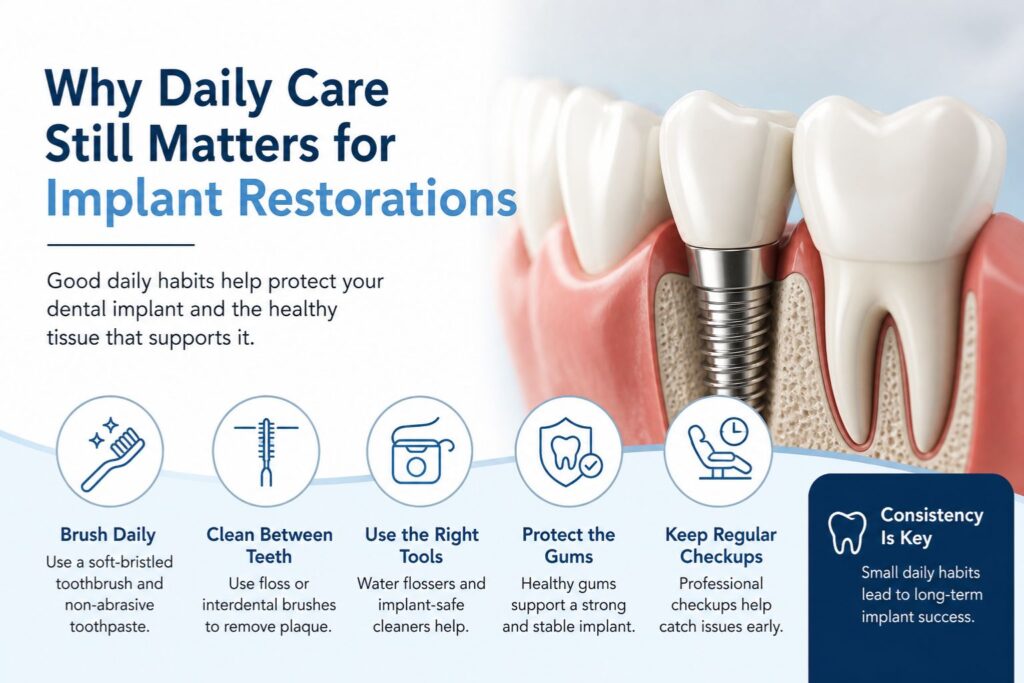
Implants do not develop cavities, but the tissue around them can still be affected by bacteria. That is the key point many people overlook. The gum and bone supporting the implant play a major role in how long it lasts. Without proper hygiene, those structures can weaken over time.
When plaque collects near the gumline, it can trigger inflammation. This early stage may not feel serious, but it can progress if ignored. Over time, inflammation can affect the bone supporting the implant, which may impact its stability. These changes often happen gradually, which is why daily maintenance matters more than occasional deep cleaning.
For patients receiving dental implant restorations in Brooklyn, the goal is not just to maintain appearance but to protect function. A well-cared-for implant allows comfortable chewing, clear speech, and a natural feel. Skipping daily cleaning can slowly compromise those benefits.
Consistency is what makes the difference. Brushing, cleaning between teeth, and routine checkups all work together to support long-term success. These habits help keep the surrounding tissue healthy and reduce the chance of complications.
At Signature Smile General & Cosmetic Dentistry, patients often ask how to keep their implants feeling like new. The answer is not complicated. It comes down to small, steady habits that fit easily into daily life.
What Happens Without Proper Implant Care?
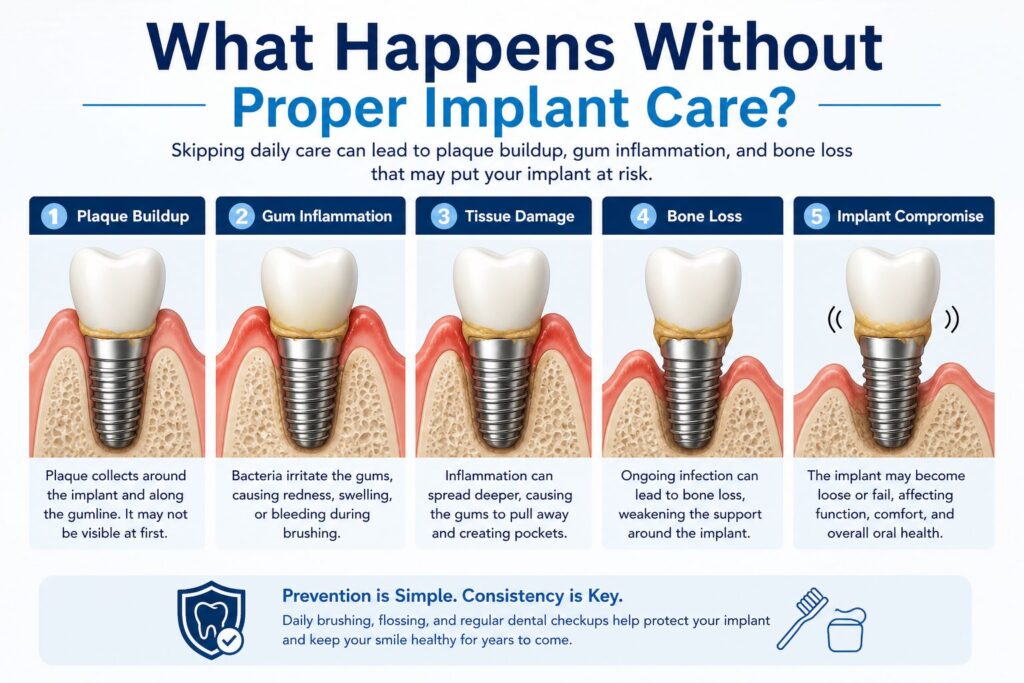
When daily hygiene is skipped, plaque begins to build up around the implant. This buildup is not always visible right away, which is why it often goes unnoticed. Over time, bacteria in plaque can irritate the gums and lead to inflammation.
The first sign is usually mild redness or slight bleeding during brushing. Many people ignore these early signals because they seem minor. However, untreated inflammation can progress and affect deeper tissues. This condition is commonly referred to as peri-implant inflammation, and it can impact the stability of the implant if left unmanaged.
As the tissue becomes more irritated, discomfort may develop. The area may feel sensitive or swollen. In some cases, the gum can start to pull away slightly, creating spaces where more bacteria collect. This cycle can continue unless proper cleaning habits are restored.
For those with dental implant restorations, these changes can affect both comfort and function. Chewing may feel less stable, and the natural feel of the implant may change. The good news is that most of these issues are preventable with consistent care.
The key takeaway is simple. Small daily habits can stop minor concerns from turning into larger problems. Addressing early signs and maintaining a routine can help protect the implant and keep everything functioning as intended.
Daily Hygiene Routine for Implant Care
Brush Gently but Thoroughly
Brushing twice a day is essential, but technique matters just as much as frequency. A soft-bristled toothbrush helps clean effectively without irritating the gums. Focus on the area where the implant meets the gumline, as this is where plaque tends to collect. Gentle, circular motions are more effective than aggressive scrubbing.
Clean Between Teeth and Implants
Regular floss may not always reach the spaces around an implant. That is why floss designed for implants or interdental brushes can be helpful. These tools clean areas that a toothbrush cannot reach. Keeping these spaces clean reduces the risk of buildup and supports healthier gum tissue.
Use a Non-Abrasive Toothpaste
Some toothpaste formulas contain abrasive ingredients that can affect the surface of restorations over time. Choosing a non-abrasive option helps protect the finish while still cleaning effectively. A simple product change can make a noticeable difference in long-term maintenance.
Rinse to Support Gum Health
An alcohol free mouth rinse can help reduce bacteria in hard-to-reach areas. It supports overall gum health without causing dryness. Adding this step to your routine provides an extra layer of protection, especially after meals or before bed.
Tools That Make Implant Care Easier
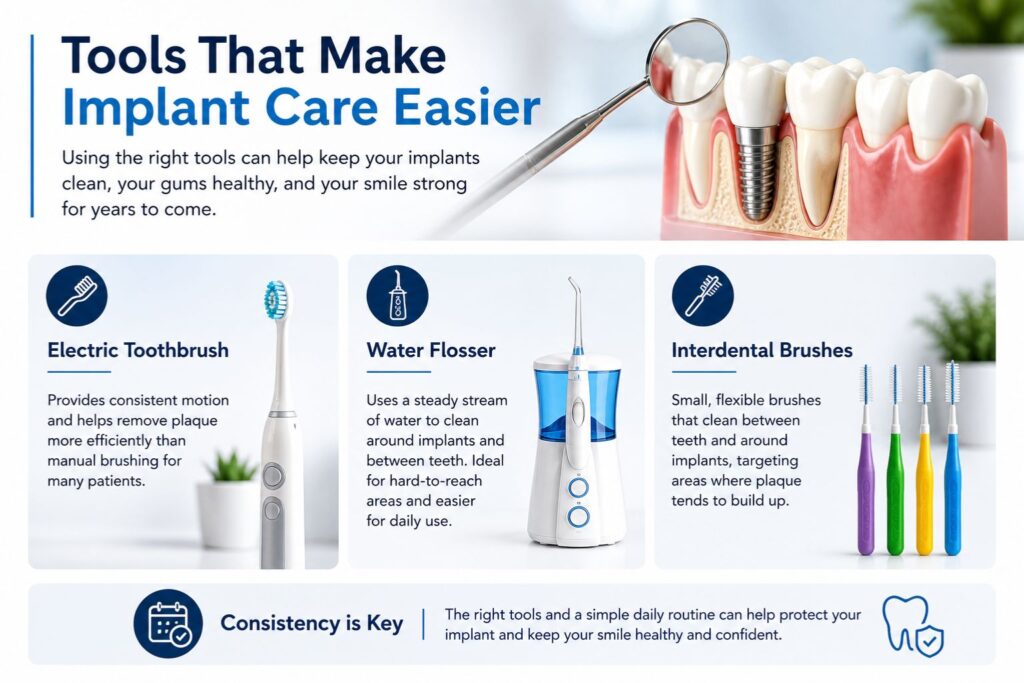
Using the right tools can make daily cleaning more effective and easier to maintain. An electric toothbrush is a good starting point. It provides consistent motion and helps remove plaque more efficiently than manual brushing for many patients.
A water flosser is another useful addition. It uses a steady stream of water to clean around implants and between teeth. This can be especially helpful for areas that are difficult to reach with traditional floss. Many patients find it more comfortable and easier to use regularly.
Interdental brushes are small, flexible tools designed to clean between teeth and around implants. They are simple to use and can target specific areas where buildup tends to occur.
The goal is to build a routine that feels manageable. When tools are easy to use, consistency becomes easier as well.
Signs Your Implant Needs Attention
Some signs should not be ignored, even if they seem minor at first. Bleeding during brushing is often one of the earliest indicators that something is not right. It usually points to inflammation in the gum tissue.
Redness or swelling around the implant is another common sign. The area may feel slightly tender or look different from the surrounding gums. These changes suggest irritation that needs to be addressed.
Unusual sensitivity or discomfort is also worth noting. While implants should feel stable and comfortable, any change in sensation should be evaluated.
Movement of the implant is a more serious concern and requires immediate attention. Even slight movement should be checked right away. Early evaluation can help prevent further complications and protect long-term results.
Lifestyle Habits That Support Implant Health
Daily choices play a role in how well implants perform over time. A balanced diet supports gum health and overall healing. Foods rich in vitamins and minerals help maintain strong tissue around the implant.
Avoiding tobacco is another important factor. Smoking can slow healing and affect gum health, which may impact implant stability. Reducing or eliminating tobacco use supports better long-term outcomes.
Consistency in hygiene routines is just as important as the products used. Simple habits done daily have a greater impact than occasional deep cleaning.
Living in a busy area like Brooklyn Heights means routines can get packed, but keeping oral hygiene consistent helps maintain comfort and confidence throughout the day.
How Often Should You Schedule Professional Checkups?
Routine visits play an important role in maintaining implant health. Even with good home care, some areas are difficult to clean completely. Regular checkups help address those areas before issues develop.
During visits, the team evaluates gum health and checks the stability of the implant. Professional cleaning helps remove buildup that may not be reached at home. These appointments also provide an opportunity to catch early signs of irritation or inflammation.
For patients with dental implant restorations in Brooklyn, consistent follow-ups help ensure everything stays on track. Preventive care is always easier than addressing advanced concerns.
At Signature Smile General & Cosmetic Dentistry, patients benefit from personalized guidance during each visit. Staying on schedule helps maintain both comfort and function.
Common Mistakes to Avoid with Implant Care
Skipping flossing is one of the most common mistakes. Brushing alone cannot clean between teeth and around implants. Ignoring this step allows plaque to build in hidden areas.
Using hard-bristle brushes can also irritate. While it may seem like a stronger brush cleans better, it can actually harm the gums over time. A softer approach is more effective and safer.
Ignoring early signs such as bleeding or sensitivity often leads to more complex concerns. Addressing these signs early helps prevent progression.
Inconsistent routines are another issue. Cleaning thoroughly one day and skipping the next creates gaps in care. A steady routine is what keeps implants functioning well over time.
Implants are designed to last, but they are not maintenance-free. The health of the surrounding tissue plays a major role in long-term success. Simple daily habits can protect both comfort and function.
Brushing carefully, cleaning between teeth, and staying consistent with routine care all contribute to better outcomes. Paying attention to early signs and keeping regular checkups helps prevent unnecessary complications.
If you want to keep your smile feeling stable and natural, a personalized approach makes all the difference. Visit Signature Smile General & Cosmetic Dentistry to stay on track with your implant care and get guidance that fits your routine.
People Also Ask
How should implant restorations be cleaned daily?
Daily cleaning includes brushing twice with a soft brush and cleaning between teeth using floss or interdental tools. This routine helps remove plaque and supports healthy surrounding gum tissue.
Are implant restorations harder to maintain than natural teeth?
They are not harder to maintain, but they do require consistent attention. Proper technique and the right tools make daily care simple and effective over time.
Can regular toothpaste be used on implant restorations?
Most toothpastes work, but non-abrasive formulas are preferred. They help protect the surface of the restoration while still removing plaque effectively.
Is flossing necessary with implant restorations?
Flossing remains important because plaque collects between teeth and around the implant. Using floss designed for implants or interdental brushes improves cleaning in those areas.
How often should implant restorations be checked professionally?
Routine checkups are typically recommended every six months, though some patients may need more frequent visits. Regular monitoring helps detect early changes and maintain long-term stability.